
Are Lakefront Homes in Ohio a Good Investment?
Yes, lakefront homes in Ohio have been a strong investment, for one durable reason: the shoreline cannot grow. Lake Erie's coast is fixed, so the supply of lakefront homes stays permanently limited while demand from buyers keeps coming, and that scarcity is what protects value. Reliable research puts the lakefront premium at roughly 25 to 50 percent above comparable inland homes, and water views measurably raise resale value. The honest caveat is that the return depends on the town, the shoreline and the specific house, so the numbers that matter are the ones for your lakefront address.

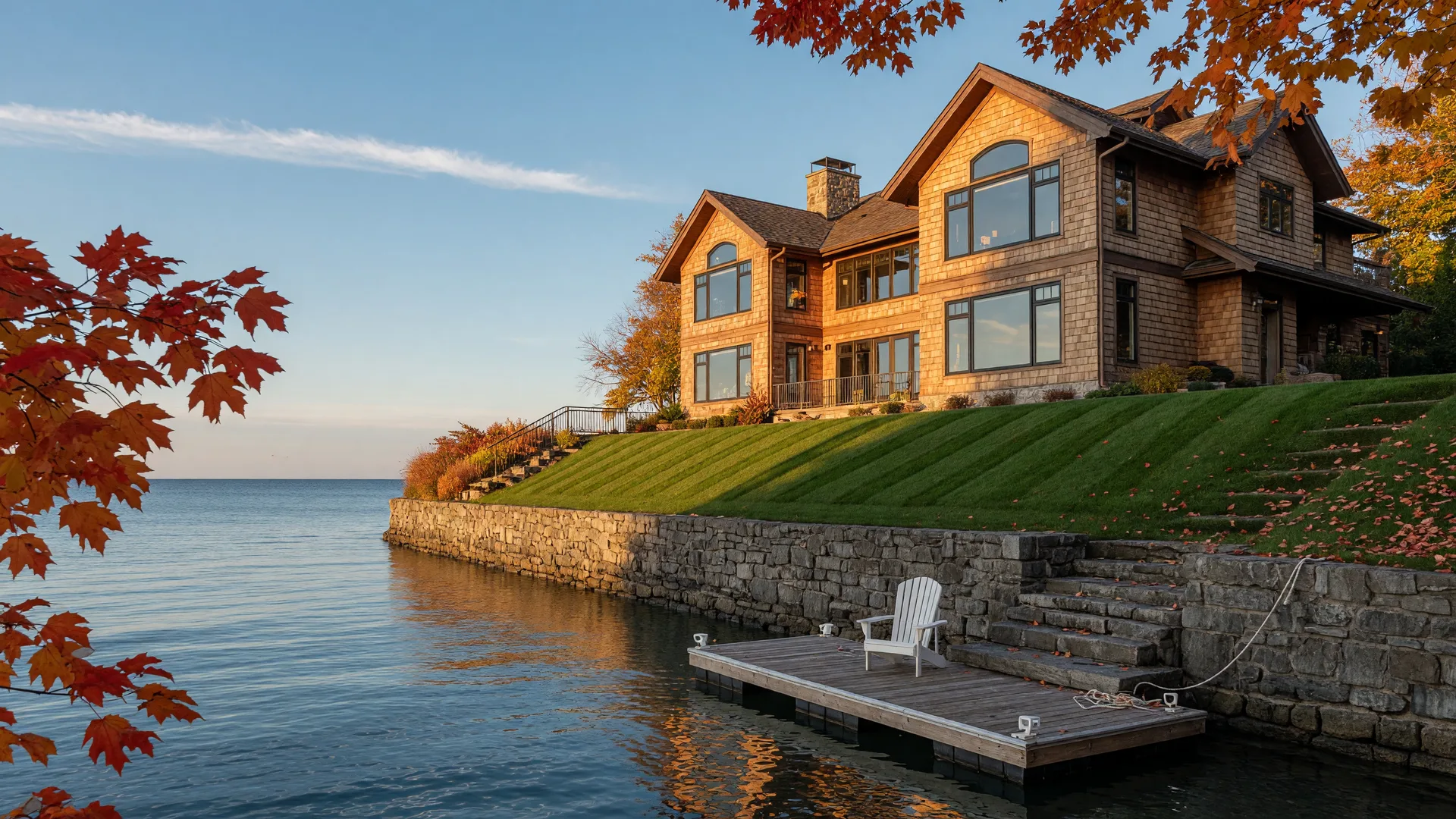
Key Takeaways
The practical summary of this article, in six lines you can weigh before you budget a lakefront purchase.
- Scarcity protects the value. The shoreline is fixed, so the supply of lakefront homes cannot grow the way inland inventory can, and that keeps demand and resale strong.
- The premium is real. Research consistently values lakefront homes 25 to 50 percent above comparable inland homes, with water views adding measurable resale value.
- Lake towns are rising, not falling. October 2026 estimates show Mentor up about 8 percent year over year and Bay Village's recent months well above its 12-month median.
- The income side helps. Waterfront properties have generated more rental revenue than non-waterfront in recent years, and the same scarcity supports resale demand.
- Not every lakefront address wins. Shoreline erosion, seawall upkeep, flood insurance and taxes eat into returns, and unstable or eroding shorelines can underperform.
- Buy the lake, budget the house. Treat the water as the asset and the house as the maintenance; the honest budget is the listing price plus the yearly shoreline line.
1 · Why the lakefront premium keeps holding
The strongest reason lakefront homes have worked as investments is not sentiment, it is arithmetic. The supply of lakefront land is fixed by the shoreline, so when demand for Lake Erie addresses rises, there is no new inventory coming online to meet it. Inland subdivisions can add phases and streets; a lake can only add more homes by making room on the same narrow strip of coast. That permanent scarcity is what keeps the premium and the resale market in place.
The research lines up with that logic. HomeLight's national analysis found lakefront properties list for at least 30 to 50 percent more per square foot than comparable off-water homes, and the National Association of Realtors has cited waterfront homes valued up to roughly 36 percent higher than inland properties. On this site, the figure we carry for Northeast Ohio is 25 to 50 percent above comparable inland homes, and it matches what the lake towns show in practice. The Lake Guide walks through that premium in detail, from the price bands town by town to what the premium buys you.
2 · What the October 2026 numbers say about Lake Erie towns
No public dataset isolates strictly lakefront homes in these towns, so the figures below are estimates from public market trackers, and they are all-homes medians. Direct lakefront addresses trade far above the town line, which is exactly why the lakefront story shows up in the gaps. In Avon Lake, the average list price ran near $749,000 against an average closed sale near $460,000 in August 2026 MLS reporting, the widest spread on the shore, because premium lakefront listings are large and sit longer than the core market that actually closes. That gap is not a failing market, it is the sign of a top-heavy one.
Across the lake towns the direction is up. Mentor's median sale price sat near $280,000 in recent three-month reporting, up roughly 8 percent year over year, with homes selling in about three to four weeks. Bay Village's most recent monthly median ran near $515,000, up sharply year over year, against a 12-month median near $425,000. Vermilion showed a median near $288,000 to $305,000 depending on the source, and Rocky River sat near $318,000 in recent reporting, slower than its neighbors. The pattern holds across the region: Cuyahoga County led appreciation near 11 percent year over year, and Lake County ran near 8 percent, with its county median around $249,000.
For the full town-by-town picture, the how much a lakefront home is worth guide carries the September 2026 market estimates for each community, updated as fresh reporting lands.
3 · The lakefront premium, town by town (estimates)
Here is how the fall 2026 numbers stack up for the main Lake Erie lake towns. Treat every figure as an estimate: sources and months differ, and countywide medians sit far below what direct lakefront addresses trade for.
| Town | Median sale price (est.) | Direction (est.) | What the lakefront tier shows |
|---|---|---|---|
| Avon Lake | ~ $450,000 | Down about 4% year over year | Widest list-versus-sold gap on the shore: lakefront asks near $749K against closed sales near $460K |
| Bay Village | ~ $425K to $515K | Recent months up sharply year over year | Bluff-top lakefront homes run $600K and well above the town median |
| Rocky River | ~ $318,000 | Down about 10% year over year | Slower town market; premium band sits longest and needs the strongest marketing |
| Vermilion | ~ $288K to $305K | Up about 8% to 17% year over year by source | Countywide report weighted to lakefront runs near $489K; lakefront tier can sit 200 days or more |
| Mentor | ~ $280,000 | Up about 8% year over year | Lake County's biggest market; homes selling in roughly three to four weeks |
Read the table as a planning range, not a quote. The same source can report a different median a month later, and a specific lakefront home follows its own shoreline, its own condition and its own buyers.
4 · The income and resale side
The investment case is not only resale. Industry data reported for waterfront properties shows they have generated more rental revenue per property than non-waterfront homes in recent years, which matters if the lake house doubles as a short-term rental or a seasonal income property. Even when a buyer never rents the home out, that income potential broadens the pool of future buyers, and scarcity does the same for resale: with few lakefront listings ever coming to market, a well-kept Lake Erie home rarely waits long for a serious buyer.
The national lake market has been growing, too. Lake Homes Realty's Spring 2025 report counted roughly 89,600 U.S. lake home and lot listings with a total market value near $48.4 billion, up from about $44.1 billion the year before. That is national context, not a local promise, but it points the same direction as the local numbers: demand for lake property has stayed strong even as inland markets cooled.
5 · The honest trade-offs: what can work against you
A lakefront home is not a pure win. The same shoreline that creates the premium also creates the costs: flood insurance in FEMA zones, higher property taxes on water-fronting land, seawall and dock upkeep, and on the bluffs, erosion management that can be significant. The shorelines, erosion and permits guide on this site walks through what Lake Erie does to banks and what Ohio requires before you build or repair a shore structure.
The research is blunt about the risk side. A University of Colorado study covered by the AP found that coastal properties most exposed to rising water sold for roughly 7 percent less than similar properties that were not as threatened. On Lake Erie the equivalent caution is not sea-level rise, it is shoreline stability: homes on actively eroding banks, on unstable bluffs, or behind failing seawalls are the ones that can lag, while homes on stable shoreline with maintained shore structures keep their premium. The cost of living and taxes guide itemizes the yearly line, and the full cost to buy a lakefront home shows how insurance, taxes and upkeep add to the purchase price.
6 · The rule for buyers: buy the lake, budget the house
The clearest way to judge a lakefront purchase is to separate the two assets in the price. You are buying the water, which is the part that cannot be replaced and tends to hold or grow in value, and you are buying the house, which is a depreciating structure on top of a fixed shoreline. Treat the lake as the investment and the house as the maintenance, and the honest budget becomes the listing price plus the yearly shoreline line: insurance, taxes, seawall, dock, bluff and snow.
If the math still works after that line, the investment case is genuine. The lakefront buyer's checklist steps through the flood-zone check, the shoreline inspection and the financing before you ever make an offer, and it is the practical starting point for anyone ready to act on this answer.
Straight answers from the article
Frequently Asked Questions
How much more are lakefront homes worth than inland homes in Ohio?
Research consistently puts lakefront homes 25 to 50 percent above comparable inland homes, with national studies citing 30 percent or more. In Northeast Ohio, direct Lake Erie addresses trade far above the town median, and bluff-top lakefront homes in premium towns like Bay Village can run well past $600,000 against a town median near $425,000 to $515,000 (an estimate).
Do lakefront homes appreciate faster than inland homes?
In general, yes, because the fixed shoreline keeps supply limited while demand stays steady. Recent estimates show lake towns like Mentor up about 8 percent year over year and Bay Village's recent months well above its 12-month median. Appreciation is not guaranteed, and homes on eroding or unstable shoreline can lag, so the local condition matters as much as the water.
Is a lakefront home in Ohio a good rental investment?
Waterfront properties have generated more rental revenue per property than non-waterfront homes in recent years, and lake towns along Lake Erie attract steady seasonal demand. That said, short-term rental rules, flood insurance and shoreline upkeep all cut into the income, so the real question is the net number after those lines, not the gross rent.
What can hurt a lakefront home's resale value?
The biggest risk on Lake Erie is the shoreline itself: active erosion, an unstable bluff or a failing seawall can all undercut the premium. Beyond that, deferred maintenance, an outdated interior and the cost of flood insurance and taxes narrow the buyer pool. Homes on stable shoreline with maintained shore structures keep their premium best.
Is 2026 a good time to buy a lakefront home in Ohio?
For most buyers, the timing depends on the town and the property, not the calendar. Lake-town inventory remains thin, so the scarce lakefront listings that do come to market still attract serious buyers. Prices are estimates, not guarantees, and a local market read on the specific street, the shoreline and the price history beats any general answer.
Sources & further reading
Verify the numbers at the source
Last updated October 21, 2026. All market figures are estimates from public trackers, not appraisals. This article is general information, not financial or legal advice; ask your Realtor, tax professional and attorney about a specific purchase.
HomeLight: How Much Value Does the Lakefront Add?
HomeLight's national analysis of the lakefront premium, comparing lakefront listings with comparable off-water homes.
VisitLake Homes Realty: Lake Real Estate Market Report
The Spring 2025 national lake market report: total U.S. lake listings, market value and growth from year to year.
VisitAP News: Is Rising Water Wrecking Coastal Home Values?
Reporting on University of Colorado research into how exposure to rising water discounts coastal property values, the caution behind every shoreline buy.
VisitReady when you are
Want a straight answer about a specific lakefront property?
John works the Lake Erie shoreline every week and can walk through the price history, the shoreline condition and the honest yearly cost for the address you have in mind. There is no obligation.
John C. Froelich, CAI, AARE, AMM
Realtor & Auctioneer · YUR Better Homes, Inc, Westlake, Ohio
Thanks for reading. Best wishes from the Lake Erie shore.