
What Should I Look for When Buying a Lakefront Home in Ohio?
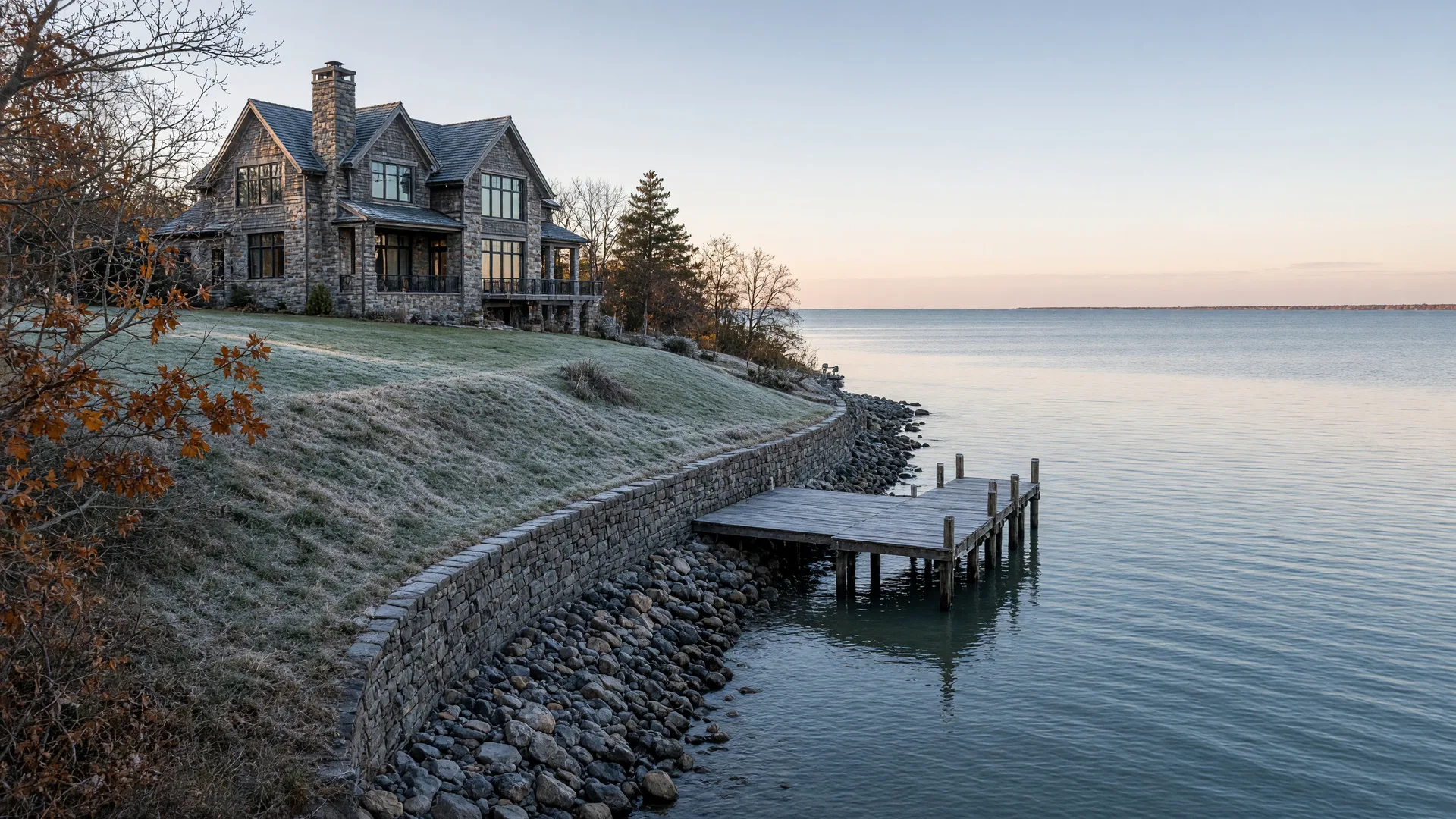
Look first at the shoreline, then at everything else. On a Lake Erie home, the seawall or bluff, the dock and its permits, and the flood zone decide whether the purchase is a pleasure or a project, and they are exactly the things a standard home inspection rarely covers. The honest rule for Ohio buyers: verify what the water touches before you fall for what the windows show.

Key Takeaways
The practical summary of this article, in six lines you can carry into a tour.
- The shoreline leads. Seawall, bluff and revetment condition comes before paint, roof and kitchen on a lakefront purchase.
- Hire a marine contractor. A standard home inspector is not the one to judge a seawall's toe, tie-backs and anchoring under Lake Erie ice and wave loads.
- Permits follow the water. ODNR permits shoreline structures under Ohio law, and the seller's file should show them, plus any submerged lands lease for the dock.
- Flood zone decides insurance. Inside a FEMA Special Flood Hazard Area, a lender will require flood insurance, so check the zone before you fall in love.
- Winter is the honest season. An off-season tour shows freeze, ice, wind and erosion patterns that a summer tour hides completely.
- The seller answers in writing. Ohio's disclosure form asks directly about flood plains and coastal erosion areas, so the answer sheet exists before you offer.
1 · The short answer: the shoreline comes first
Buyers tour a lakefront home the way they tour any home: kitchen, bedrooms, yard, view. On Lake Erie, that order is backwards. The water side of the property carries the biggest costs, the strictest rules and the least standardized inspections, so it should be checked first. A home inspection covers the house. A marine contractor covers the seawall. Ohio's permit system covers what is built along the shore. All three belong in your due diligence, and only one of them is about the house you can see from the street.
The practical order: pull the flood zone and the disclosure form before touring, look hard at the shoreline during the tour, and hire a marine contractor before making an offer. The lakefront buyer's checklist on this site walks the whole path from flood-zone check to closing. This article is the part that happens at the water's edge.
2 · Seawalls and bluffs: bring a marine contractor
Lake Erie is not a pond. Wind-driven waves, shifting ice and the freeze-thaw cycle of an Ohio winter put real force against every structure that holds the shoreline in place. ODNR guidance is explicit that Ohio shore structures must be designed for those forces, with toe protection on the order of 10 to 15 feet and revetment widths of 25 to 30 feet in many designs. That is why the seawall is a specialty inspection, not a line item on a general one.
What a marine contractor checks: the toe and footing below the waterline, the tie-backs that anchor a steel or concrete wall into the bank, the stability of the fill behind the wall, and any cracking, spalling, leaning sections or exposed steel on the face. On a natural bluff, they look for slumping, fresh scarps, exposed roots, drainage failures and signs that the bank is actively moving. If your shoreline sits in a designated Coastal Erosion Area, Ohio maps it as land along Lake Erie expected to be lost to erosion within 30 years unless protected, and the seller must disclose it. The shoreline, erosion and permits guide on this site explains how CEA mapping, flood zones and shore structures fit together.
3 · Docks, permits and who owns the water access
Ohio regulates the shore. Under Ohio Revised Code Section 1506.40, a Shore Structure Permit from the Ohio Department of Natural Resources is required before building a seawall, pier, groin, revetment, breakwater, jetty or other erosion and flood control structure along the Ohio shore. Docks and piers can also carry a Submerged Lands Lease from ODNR. None of that goes away when a home changes hands: the structures stay, and the permits should be in the seller's file.
The buyer's questions are simple. Does a permit exist for the seawall, the revetment and the dock, and does it match what is actually built? Is the dock owned by the property, or maintained under an easement or a lease? Who repairs it when the ice moves it, and what did the last repair cost? An unpermitted structure can become your problem weeks after closing, and an unpermitted one is also the kind of detail a sharp buyer's agent finds before you sign anything. ODNR's Lake Erie coastal permit pages are the authoritative reference for what requires a permit, a lease or a coastal erosion area approval.
A note on repairs: replacing boards on an existing permitted dock, or maintaining a seawall in place, generally does not require a new Shore Structure Permit. The line is between maintaining what exists and constructing something new. That is a factual question for the current permit file, and a good reason to ask for the shoreline paperwork before you negotiate, not after.
4 · Flood zone first, flood insurance second
The flood map decides more than the insurance bill. If the property sits in a mapped FEMA Special Flood Hazard Area, such as Zone AE where the annual flood chance is about 1 percent, a lender will generally require flood insurance on a financed purchase. Ohio's coastal flood hazard areas, the shoreline zones subject to Lake Erie flooding, are defined in state administrative rules, and ODNR hosts Ohio's flood maps and studies. Check the zone before you tour, because it shapes what you can borrow and what the home costs to keep every single year.
The flood insurance guide on this site covers who is required to carry it, what Ohio policies average and how private policies compare with NFIP. The short version for buyers: an Ohio NFIP premium averages roughly $1,350 a year, high-risk coastal addresses run higher, and the requirement follows the lender, not your comfort level. Budget it as a line item, exactly like taxes.
5 · Three shorelines, three inspection jobs
Lake Erie shorelines in Northeast Ohio are mostly seawalls, stone revetments and natural bluffs, with canal and lagoon slips sprinkled through towns like Vermilion. Here is how the inspection changes with the shoreline. These are planning observations, not engineering advice.
| Shoreline | What to inspect | The Ohio angle |
|---|---|---|
| Concrete or steel seawall | Face cracks, spalling, leaning sections, exposed steel, the toe below the waterline and the tie-backs into the bank | A permitted structure that should match the permit file; repairs in place generally need no new permit |
| Stone revetment | Displaced or missing stone, gaps that let wave energy through, undercutting below the slope, settlement after ice | Typically the least costly to repair; check the original permit and the engineer's design width |
| Natural bluff or bank | Slumping, fresh scarps, exposed roots, drainage running over the slope, how far the house sits from the edge | May sit in a Coastal Erosion Area that must be disclosed; new permanent structures in a CEA need a permit |
| Canal or lagoon slip | Bulkhead condition, slip depth for your boat, the dock and hoist, sediment and whether the canal is dredged | Docks and bulkheads can carry leases and permits; ask who maintains the shared waterway |
Every one of these checks belongs in the contingency window. Lakefront buyers who add a shoreline inspection to the standard home inspection buy with their eyes open, and sellers who keep a clean shoreline file sell faster. The seller-side disclosure guide on this site shows the same shoreline from the other side of the table.
6 · What the November 2026 West Shore numbers show
For the buyer doing due diligence right now, the town numbers frame the market. No public dataset isolates strictly direct Lake Erie frontage in these towns, so every figure below is an estimate from public market trackers and local reports researched November 4, 2026, and the town medians include all homes, not just waterfront ones. Direct lakefront addresses trade well above these lines.
- Avon Lake: the August 2026 local market report showed 27 active listings, 20 under contract and 125 closings, with an average sale near $460,000 and an average list near $749,000, the widest list-versus-sold gap on the shore and a sign of aggressive pricing at the premium tier. The Redfin lakefront-only sample for the town is thin, roughly 3 active listings at a median list near $400,000, which says more about how scarce direct frontage is than about value.
- Bay Village: the September 2026 Redfin median sale ran near $450,000, up about 17.6 percent year over year, while the Homes.com water-view median sat near $430,000, up about 6 percent, selling in roughly 25 days. One local report showed 19 active listings and 14 pending, so the west-side selection is real but compact.
- Rocky River: the August 2026 local market report counted 29 active listings, 22 pending and 78 recent closings, with an average sale near $466,000. Active listings averaged about 86 days on market, with the high end sitting longest, which rewards buyers who inspect carefully and negotiate on condition.
Regionally, Northeast Ohio medians span roughly $234,000 to $330,000 across the five counties with typical sales in 19 to 39 days, and Cuyahoga County, home to Bay Village and Rocky River, led appreciation at about 11 percent year over year. For a buyer that means a healthy, competitive market where a thorough shoreline inspection is the difference between a confident offer and a costly surprise. The Avon Lake community guide and the Bay Village community guide dig into which streets, bluffs and slips fit which buyer.
7 · The seller's answer sheet: what to ask before you offer
Ohio sellers complete the state Residential Property Disclosure Form, and on a lakefront home the form asks directly about flood plains and coastal erosion areas. That is your first answer sheet, and it has legal weight. Beyond the form, ask for the shoreline file: the ODNR Shore Structure Permit for the seawall or revetment, any submerged lands lease for the dock, the survey showing the waterline and the structure lines, and the flood insurance history, including what the last few years actually cost.
- Shoreline work: what was built, when, by whom, and whether it is permitted and matches what stands today.
- Water and waste: city water or a well, sewer or septic, and the last maintenance records for either system.
- Ice and storm history: what the winters have done to the dock, the seawall and the shoreline, and what each repair cost.
- Insurance file: current flood premium, the deductible, and whether the property has ever filed a claim.
- The inspection contingency: build the marine shoreline inspection into your offer, exactly like the general home inspection, with a clear window to walk away if the water side fails.
Financing adds one more layer: when the home is in a flood zone, your lender will want the flood insurance in force before closing, and the structure needs to land inside the mapped footprint, so a survey matters. The lakefront mortgage guide on this site walks the loan and appraisal side of the same checklist.
Straight answers from the article
Frequently Asked Questions
Do I need a separate inspection for the seawall on a Lake Erie home?
Yes. A standard home inspection covers the house, not the shoreline. Hire a marine contractor familiar with Lake Erie to check the seawall's toe, tie-backs, anchoring and face condition, because ice and wave loads stress the base of the structure in ways a general inspector is not trained to judge.
How do I know if a seawall is in good shape?
Look for vertical cracks, spalling or chipping concrete, sections that lean toward the water, a missing cap, exposed steel and gaps behind the wall. Then have a marine contractor check what you cannot see: the toe below the waterline, the tie-backs into the bank and the fill behind the wall. A seawall can look fine from the lawn and be failing from the water side.
Can I buy a lakefront home with an unpermitted dock or seawall?
You can purchase the property, but the unpermitted structure is a liability you would inherit. Ohio requires a Shore Structure Permit for shoreline structures, and docks can carry a submerged lands lease. Before you make an offer, ask the seller for the permit file and confirm the structures match what was approved, so the cost and the fix land on the right side of closing.
Will my lender require flood insurance on a lakefront home?
If the property sits in a mapped FEMA Special Flood Hazard Area, such as Zone AE, lenders generally require flood insurance on a financed purchase. Ohio NFIP premiums average roughly $1,350 a year and high-risk coastal addresses cost more. Check the flood map before you tour, because the requirement follows the loan, not the view.
What is a Coastal Erosion Area and should it stop me from buying?
A Coastal Erosion Area is land along Lake Erie that Ohio maps as likely to be lost to erosion within 30 years unless protected. Sellers must disclose a CEA on the state's disclosure form, and new permanent structures inside one need a permit. A CEA is not an automatic no: it is a reason to budget shoreline protection and to have the bluff assessed by a professional before you commit.
Sources & further reading
Verify the shoreline at the source
Last updated November 4, 2026. This article is general information, not engineering, financial or legal advice; verify specifics with a marine contractor, your lender and a real estate attorney.
ODNR: Lake Erie Coastal Permits
The Ohio Department of Natural Resources page covering Shore Structure Permits, Submerged Lands Leases and coastal erosion area approvals along Ohio's Lake Erie shore.
VisitOhio Revised Code Section 1506.40
The Ohio statute that requires a Shore Structure Permit before constructing seawalls, piers, groins, revetments and other erosion and flood control structures along the Ohio shore.
VisitReady when you are
Buying a lakefront home this fall or winter?
John works the Lake Erie shoreline every week, from Bay Village to Vermilion and east to Geneva-on-the-Lake, and he knows which shoreline files are clean and which homes carry deferred water-side work. He can line up the marine inspection, walk the permit question with you and structure an offer that protects the water side of the deal.
John C. Froelich, CAI, AARE, AMM
Realtor & Auctioneer · YUR Better Homes, Inc, Westlake, Ohio
Thanks for reading. Best wishes from the Lake Erie shore.